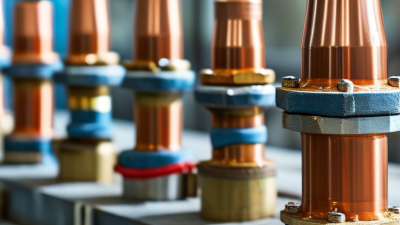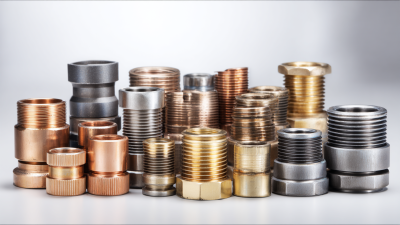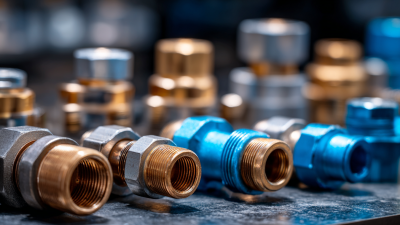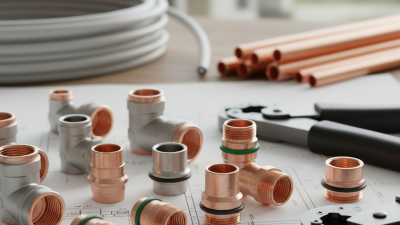
Choosing the best Press Fittings in 2026 requires more than comparing prices or polished product catalogs. Global buyers must examine material, connection design, pressure ratings, temperature limits, and regional availability. Stainless steel, copper, carbon steel, and multilayer-compatible systems each solve different installation problems. The right choice depends on the fluid, pipe material, working environment, and maintenance plan.
Mark Eatherton, a respected hydronic-systems educator, has said, “A fitting is only as reliable as the installation behind it.” That practical warning remains important for international projects. A stainless-steel fitting may perform well in a corrosive plant room, while a copper fitting may suit clean water systems. In freezing climates, however, even a high-quality connection can fail when insulation and drainage are ignored.
This guide compares the leading Press Fittings types expected to attract global buyers in 2026. It considers sealing methods, profile compatibility, tool requirements, certification evidence, and long-term serviceability. Small details matter. A jaw profile mismatch can stop a project. A missing test certificate can delay approval.
Some choices are less obvious. The cheapest fitting may create higher labor costs. The most advanced system may be difficult to source locally. Buyers should also question supplier claims and request traceable documentation. No fitting is perfect for every market. Good selection requires technical judgment, field experience, and a willingness to reconsider assumptions before purchase.
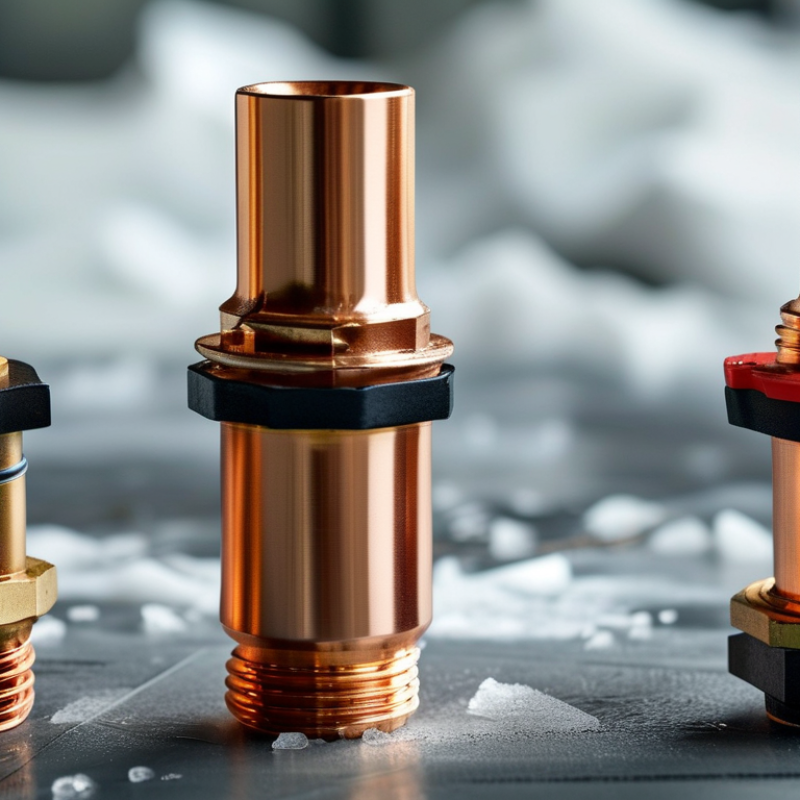
Press fittings are mechanical connectors used to join pipes without threading, welding, or open flames. They usually contain a shaped body and an elastomeric sealing ring. A pressing tool compresses the fitting sleeve around the prepared pipe. This creates a controlled, permanent connection.
The process looks simple, but preparation matters. The installer cuts the pipe square, removes burrs, and checks the sealing surface for scratches. A depth mark confirms that the pipe reaches the correct position. The tool then applies radial force around the sleeve. The fitting grips the pipe while the sealing ring maintains pressure against its surface. Some systems reveal an unpressed joint during pressure testing, but this feature is not universal.
Common types include copper, stainless steel, carbon steel, and multilayer-pipe press fittings. Each type has different limits for pressure, temperature, corrosion resistance, and fluid compatibility. A fitting suitable for indoor water may not suit heating circuits or approved gas applications. Global buyers should verify technical standards, material certificates, tool compatibility, and local installation rules before ordering. Small details matter.
In field work, I have seen clean-looking joints fail because pipes were not fully inserted. The fitting was not always the problem. Storage also deserves attention; damaged sealing rings can create leaks months later. Press technology saves installation time, yet it still requires trained inspection, calibrated tools, and careful testing. A quick connection is not automatically a reliable one.
What Are Press Fittings and How Do They Work?
How press fittings work: A press fitting uses a shaped sleeve and sealing element to join a pipe. A compatible pressing tool permanently deforms the sleeve around the pipe, creating a mechanical and sealed connection without threading, soldering, or open flame.
Chart data: The chart shows common copper tube outside diameters used with copper press-fitting systems under EN 1057 specifications. Copper press fittings are widely used for potable water, heating, gas, and HVAC applications, while stainless-steel and carbon-steel press fittings are selected for corrosion resistance or higher mechanical requirements.
Which Press Fitting Types Are Available in 2026?
Global buyers can choose several press fitting types in 2026. Copper press fittings remain common for potable water, heating, and chilled-water lines. Stainless steel fittings suit corrosive environments, food facilities, and industrial piping. Carbon steel press fittings support heating, cooling, and fire-protection applications. Plastic options include PEX, multilayer, and polypropylene systems. ISO 21003 provides guidance for multilayer piping systems, while regional standards control testing and installation details.
The 2024 UNEP Global Status Report found that buildings used about 32% of global energy and produced 34% of global carbon emissions in 2023. Efficient piping connections can reduce leakage, rework, and installation waste. However, press fittings are not automatically better. Material compatibility, temperature, pressure, and water chemistry still matter. The choice is not always obvious. A low-cost fitting may become expensive after field failures.
Tips: Match the fitting material with the pipe material and fluid. Check pressure ratings at the highest operating temperature. Request test reports, traceability records, and third-party certifications. Confirm compatibility with local ISO, EN, ASTM, or ASME requirements. For gas systems, use only fittings specifically approved for that service. A careful buyer should also inspect sealing elements, tool calibration, and installation access. Small details often decide reliability.
| Press Fitting Type | Compatible Pipe Materials | Typical Size Range | Common Applications | Main Advantages | Important Buying Considerations | Common Reference Standards |
|---|---|---|---|---|---|---|
| Copper Press Fittings | Hard and soft copper tubing | Commonly 12–108 mm or 1/2–4 in, depending on the system | Potable water, hot water, heating, chilled water, HVAC and approved fuel-gas installations | Fast installation without soldering, reliable dimensional stability and broad availability | Confirm tubing wall thickness, sealing element, tool jaw profile, and local gas or drinking-water approval | ASME B16.51; ASTM B88 tubing; local plumbing and gas codes |
| Stainless Steel Press Fittings | Stainless steel tubing, usually austenitic grades such as 304 or 316 systems | Commonly 15–108 mm or 1/2–4 in; larger sizes are system-dependent | Drinking water, commercial HVAC, food processing, industrial fluids and corrosive environments | Good corrosion resistance, clean installation and suitability for hygienic piping systems | Match fitting grade to the fluid, verify chloride limits, and check whether the sealing material is suitable for temperature and chemistry | ASME B16.51 where applicable; ASTM A269 or EN 10312 tubing; local hygienic and pressure regulations |
| Carbon Steel Press Fittings | Thin-wall carbon steel pipe or tube designed for press connection | Commonly 15–108 mm or 1/2–4 in; system limits vary | Closed-loop heating, chilled water, compressed air, industrial utilities and selected fire-protection systems | Rapid assembly, no hot work, strong mechanical connection and high productivity on commercial projects | Check corrosion protection, operating pressure, pipe wall specification, fire-system listing and compatibility with the fluid | ASME B16.51 where applicable; EN 10305 or equivalent tubing requirements; project-specific fire and pressure approvals |
| Brass Press Fittings for PEX and Multilayer Pipe | PEX, PE-RT and multilayer composite pipe such as PEX-AL-PEX | Commonly 16–32 mm or 3/8–1 1/4 in | Potable water, radiant heating, domestic hot water and low-temperature plumbing systems | Compact design, fast assembly and compatibility with flexible pipe layouts | Verify pipe series, insertion depth, sleeve design, calibration requirements and the approved press-tool profile | ASTM F1807, ASTM F2159, ASTM F2080, ASTM F3348 or applicable EN/ISO standards, depending on the fitting design |
| Polymer Press-Sleeve Fittings | PEX or PE-RT pipe using an expansion, compression or axial-sleeve joining method | Commonly 16–63 mm, depending on the pipe system | Residential plumbing, hydronic heating, radiant floors and distribution manifolds | Lightweight construction, resistance to scale and corrosion, and low installation time | Do not mix components from incompatible systems; confirm expansion or sleeve tools, temperature ratings and UV-storage requirements | ASTM F877, ASTM F1807, ASTM F1960 or relevant ISO/EN standards, according to the connection method |
| Multilayer Pipe Press Fittings | PEX-AL-PEX, PE-AL-PE, PE-RT-AL-PE-RT and other aluminum-core composite pipes | Commonly 16–63 mm | Potable water, heating, cooling, compressed air and gas where specifically approved | Low thermal expansion, easy bending, reduced noise and clean flame-free installation | Pipe must be properly cut, calibrated and chamfered; confirm profile compatibility and fitting approval for the intended service | ISO 21003, EN 1254-7 and applicable national plumbing or gas standards |
| Press Fittings for Corrugated Stainless Steel Tubing | Corrugated stainless steel tubing used in specialized gas or fluid systems | Usually project-specific; commonly small and medium nominal diameters | Fuel-gas distribution and selected industrial or utility installations | Flexible routing, reduced joint preparation and suitability for confined installation areas | Use only a fitting and tubing combination approved as one system; confirm gas certification, tool requirements and installation rules | Applicable fuel-gas codes, ISO/EN product standards and local authority approvals |
Buyer note: Size ranges, pressure ratings, temperature limits, sealing materials and tool profiles are system-specific. Before purchasing, verify the complete pipe-and-fitting assembly against the destination market’s plumbing, gas, potable-water, pressure and fire-safety requirements.
Material choice should follow water chemistry, temperature, pressure, and tube compatibility. Stainless-steel press fittings suit corrosive environments and exposed mechanical service. Copper fittings remain practical for hot-water systems with familiar installation methods. Multilayer and polymer systems reduce weight, but their fittings require precise calibration and approved pressing tools. A lighter fitting is not automatically a better fitting.
Standards create the real selection boundary. EN 1254-7 addresses press fittings for copper tubes, while ISO 21003 covers multilayer piping systems. For potable water, buyers should check local certification requirements, including chemical migration limits and hygienic approvals.
The United Nations World Water Development Report 2024 states that 2.2 billion people lacked safely managed drinking water in 2022. That figure increases pressure for durable, repairable infrastructure. The report also shows why material safety cannot be treated as a paperwork detail.
Field inspections often reveal small failures. An incorrectly calibrated tube can leak behind a wall months later. Mixed-metal assemblies may also create corrosion risks without suitable separation.
The World Health Organization’s Guidelines for Drinking-water Quality remain a useful reference for assessing contaminants and treatment conditions. Buyers should request pressure-test records, batch traceability, and clear installation instructions.
Some specifications still focus too heavily on purchase price. That approach deserves reconsideration.
A fitting that saves cents may create expensive access work later.
Global buyers should compare press fittings by application, not appearance. Stainless steel fittings suit corrosive water, coastal projects, and demanding industrial environments. Copper fittings perform well in hot and cold water systems when installation quality is controlled. Carbon steel options often fit heating, cooling, and gas-related applications, but buyers must verify local approval requirements. Multilayer pipe systems can reduce weight and installation time. Their fittings must match the exact pipe structure.
Performance starts with pressure and temperature ratings. Check test reports, sealing materials, corrosion resistance, and resistance to vibration. A fitting may pass a laboratory test but fail after poor pressing or an incompatible jaw profile. That detail is easy to miss. Ask for dimensional tolerances, batch traceability, and inspection records. In real projects, installers often value clear markings more than attractive packaging.
Cost comparison needs a wider lens. Include fitting prices, press tools, labor, shipping, spare seals, and future access. A low unit price can mislead. Stainless steel may cost more initially, yet reduce replacement risks in aggressive water. Copper can be economical where local labor already understands it.
Compatibility also affects waste: confirm pipe dimensions, seal compounds, fluid chemistry, and regional standards before ordering. I have seen projects lose time because one fitting matched the pipe size but not the pressing system. Buyers should leave room for that uncomfortable question: is the cheapest choice still reliable after ten years?
Before ordering press fittings internationally, buyers should verify the complete application, not only the fitting shape. Copper, stainless steel, carbon steel, and multilayer systems require different fitting profiles, tools, and sealing materials. Check tube outside diameter, wall thickness, operating pressure, and temperature range. A 22 mm tube is not automatically compatible with every 22 mm fitting. It sounds obvious, yet purchasing errors still happen.
Request current technical drawings, material certificates, pressure-test records, and batch traceability. Confirm whether the product complies with relevant standards, such as EN 1254-7, ASME B16.51, or applicable national requirements. For drinking-water projects, review potable-water approvals and elastomer compatibility.
The WHO and UNICEF Joint Monitoring Programme reported that 2.2 billion people lacked safely managed drinking water in 2022. That figure makes seal reliability more than a specification detail.
International buyers should also inspect tool compatibility, jaw dimensions, spare-part access, packaging, and installation instructions. Ask how the supplier controls insertion depth and leak testing.
A 2024 Grand View Research analysis placed the global plumbing fixtures market at about USD 87 billion in 2023, showing strong demand but not guaranteed quality. Market size proves opportunity, not suitability.
One weak assumption is trusting a laboratory report without checking its test pressure, sampling method, and validity date. Shipping damage is another overlooked risk.
Fittings should arrive capped, dry, labeled, and separated by size. Even a careful checklist may miss local inspection rules. That is why pre-shipment sample testing remains worthwhile.