How to Choose the Right Press Fittings for Plumbing Projects?
In the world of plumbing, choosing the right press fittings is crucial. According to the International Association of Plumbing and Mechanical Officials (IAPMO), improper fitting selection can lead to costly leaks and repairs. Press fittings have gained popularity due to their ease of installation and reliability. They reduce labor time by up to 30%, making them a favorite among professionals.
However, not all press fittings are created equal. Different materials and designs can affect performance and durability. A report from the American Society of Plumbing Engineers (ASPE) highlights that using the wrong type of fitting can compromise the entire system. Many contractors find themselves reflecting on their choices when faced with unexpected failures.
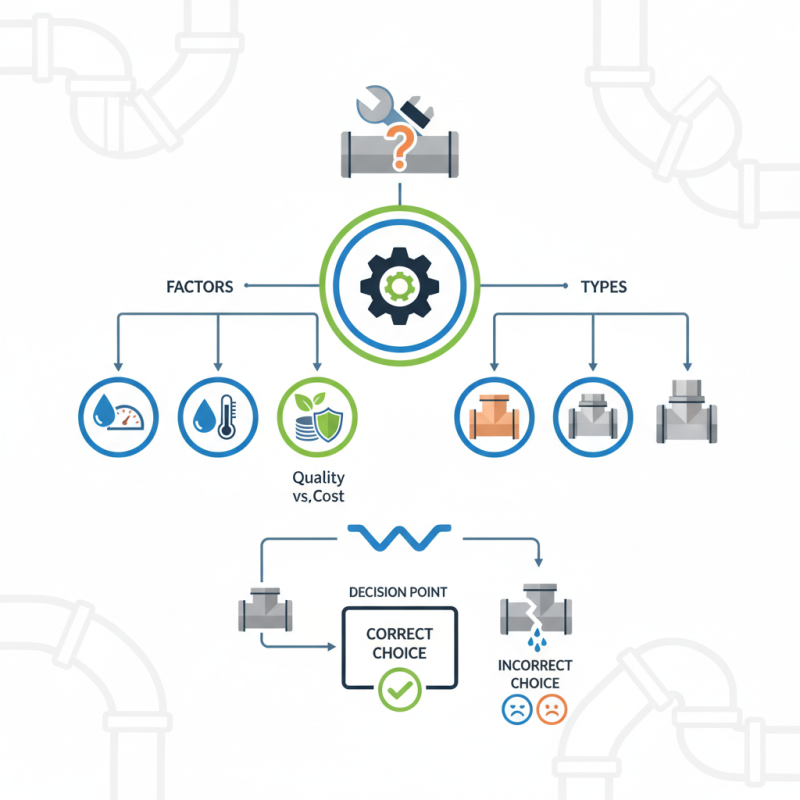
Selecting press fittings requires careful consideration. Plumbers should assess the specific requirements of each project, including water pressure and environmental factors. It's essential to balance quality with cost, as cheaper options may lead to future regrets. Understanding the trade-offs will ensure long-lasting and effective plumbing solutions.
Understanding Different Types of Press Fittings for Plumbing
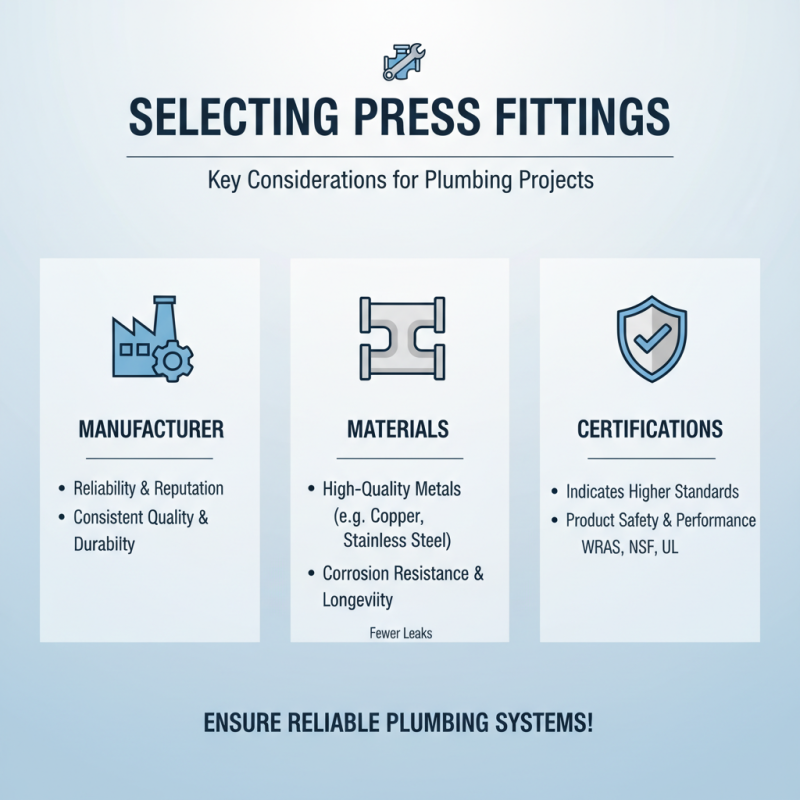
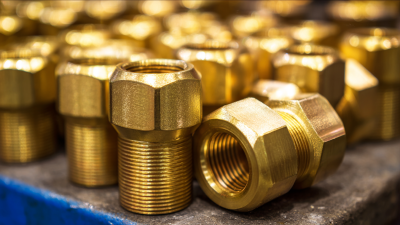
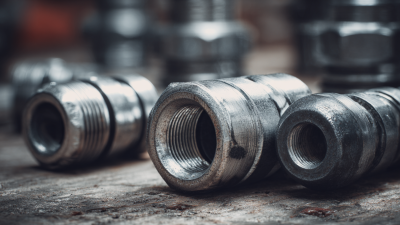
When tackling plumbing projects, press fittings can significantly simplify your efforts. Understanding the different types is essential. Copper, stainless steel, and brass are the three most common materials. Each has its unique properties and uses. Copper fittings are durable and resistant to corrosion. They can withstand high temperatures well, making them a popular choice.
Stainless steel fittings offer high strength and excellent resistance to rust. They are ideal for harsh environments but may be more expensive. Brass fittings are highly malleable and easy to work with. However, they can corrode over time if not properly maintained. The choice often depends on your project specifics and the water quality in your area.
There are also various fitting types, like couplings, elbows, and tees. Each serves a unique purpose in plumbing systems. A mistake often made is not considering the pressure ratings. Fittings need to match the intended application. Also, the compatibility of sizes and types can lead to leaks. An error in selection can cost time and resources, making careful consideration vital.
Assessing Material Compatibility for Plumbing Press Fittings
Choosing the right press fittings for plumbing projects hinges significantly on material compatibility. Different materials respond uniquely under various conditions. For example, copper and PEX have distinct properties that can affect the longevity and functionality of your plumbing system. Selecting incompatible materials can lead to leaks and costly repairs.
When considering material compatibility, think about the environment. Is your installation indoors or outdoors? Will it be exposed to high temperatures? These factors influence the choice of fittings.
**Tip:** Always verify the specifications of your materials. Mismatched fittings often cause issues.
Another thing to ponder is the chemical compatibility. Some materials may react negatively with certain fluids. This reaction can produce harmful results. Make sure to check compatibility charts. It can save you future headaches.
**Tip:** Conduct a small test when in doubt. A slight error can lead to significant damage.
Compatibility isn't just about the materials; it's also about the installation procedure. Ensure you follow proper techniques. A rushed job can lead to errors in sealing.
How to Choose the Right Press Fittings for Plumbing Projects?
| Material |
Compatibility |
Applications |
Temperature Range |
Pressure Rating |
| Copper |
Excellent with Copper and PEX |
Water Supply, Heating |
-20°C to 90°C |
10 bar |
| Stainless Steel |
Great with PEX and PVC |
Industrial, Domestic |
-40°C to 120°C |
20 bar |
| PPR (Polypropylene Random Copolymer) |
Compatible with PPR systems |
Hot and Cold Water |
-10°C to 95°C |
16 bar |
| PVC (Polyvinyl Chloride) |
Generally compatible with PVC fittings |
Drainage, Venting |
0°C to 60°C |
6 bar |
Evaluating Size and Connection Types for Press Fittings
When selecting press fittings for plumbing, size matters. A study by the American Society of Plumbing Engineers indicates that improper sizing leads to around 30% of system failures. Accurate measurements are vital for ensuring a leak-free system. Common sizes for press fittings include 1/2 inch, 3/4 inch, and 1 inch. However, the optimal choice depends on the specific requirements of your project.
Connection types also play a critical role. There are several options, including copper, stainless steel, and carbon steel. Each material has its unique characteristics. For instance, copper fittings resist corrosion and are ideal for potable water. In contrast, stainless steel fittings are excellent for high-pressure systems. A report from the Plumbing Manufacturers International shows that approximately 40% of plumbing issues stem from incompatible materials. Hence, evaluating compatibility is crucial.
Choosing the right combination can be tricky. Many professionals overlook the thermal expansion of materials. This oversight can lead to joint failures. Additionally, consider the installation environment. Exposed fittings may need extra protection against environmental factors. Ultimately, informed decisions based on accurate data are key to project success.
Press Fittings Size and Connection Types for Plumbing Projects
Considering Pressure Ratings and Application Requirements
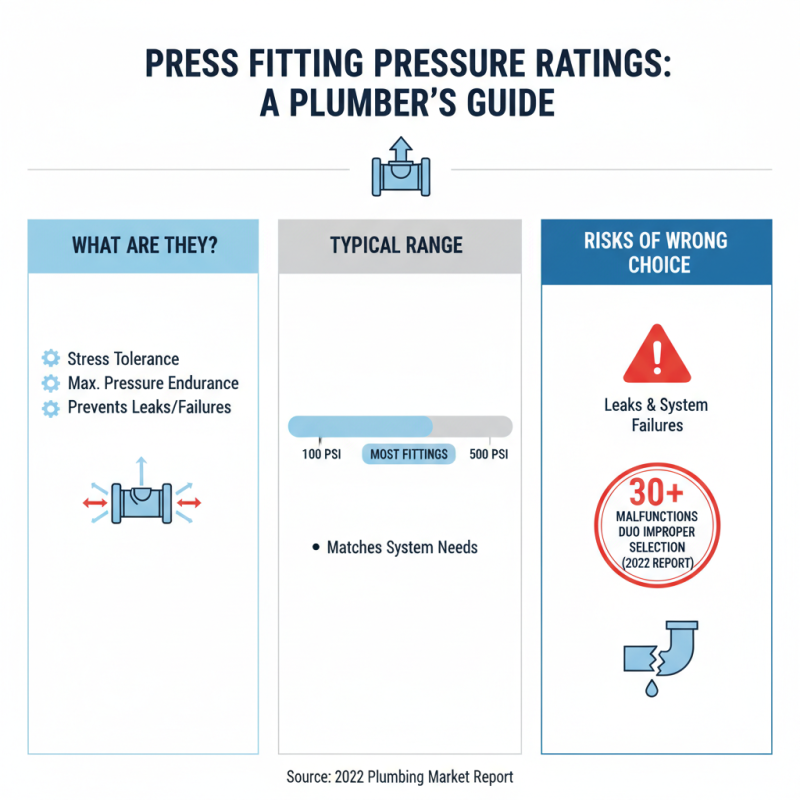
When selecting press fittings for plumbing projects, understanding pressure ratings is crucial. Pressure ratings dictate how much stress the fitting can endure. Most fittings are rated for a specific pressure, typically ranging from 100 to 500 PSI. Choosing a fitting with an inadequate pressure rating can lead to leaks or system failures. For instance, a 2022 market report indicated that improper selection caused over 30% of system malfunctions in plumbing projects.
Application requirements vary widely. A fitting designed for hot water may not perform well in cold-water systems. Similarly, corrosive environments demand specific materials. According to industry forecasts, the wrong material choice leads to an increased risk of early failures. Many contractors overlook these details, leading to costly repairs down the line.
Consider the environmental factors that affect the installation. High humidity can degrade certain materials faster. Additionally, improper alignment during installation can also compromise the integrity of a fitting. Industry experts believe that about 15% of plumbing issues arise from installation errors. This highlights the importance of careful planning and material selection. It's essential to analyze both pressure ratings and the specific application for reliability and durability.