2026 How to Choose the Right Ball Valve for Your Needs?
Choosing the right ball valve for your needs can be a complex task. The world of ball valves is diverse. Each type has unique features tailored to specific applications. Understanding these features will enhance your purchasing decision.
Ball valves play a crucial role in various industries. They control the flow of fluids with precision. Selecting the right valve ensures efficiency and longevity in operations. It's essential to consider factors like temperature, pressure, and fluid type when making your choice.
Many buyers overlook these details. They may choose a ball valve based solely on cost. This approach can lead to inefficiencies or even costly repairs. Reflecting on your specific application will lead to better outcomes. Ultimately, making an informed decision requires careful thought and expert guidance.
Understanding the Different Types of Ball Valves and Their Applications
When selecting a ball valve, understanding the different types available is crucial. Common types include the floating ball valve and the trunnion-mounted ball valve.
The floating ball valve is versatile and often used in low- to medium-pressure applications. It relies on the line pressure to push the ball against the seat, creating a tight seal. However, this design may not perform well under high-pressure situations.
On the other hand, the trunnion-mounted ball valve is engineered for more demanding environments. It has additional support, which reduces wear and extends the valve's lifespan.
This type is particularly effective in high-pressure and high-flow applications. However, it tends to be more costly compared to floating ball valves.
Choosing the right valve requires careful consideration of your specific needs. Factors such as pressure, temperature, and the nature of the fluid must be assessed. Failure to match the valve type to the application could lead to performance issues. Moreover, it’s essential to consider the required maintenance and potential long-term costs. Engaging with experts or conducting thorough research can help navigate these challenges effectively.
Key Factors to Consider When Selecting a Ball Valve for Your System
Selecting the right ball valve for your system involves several key factors. One crucial aspect is the valve's material. Materials like stainless steel, brass, and PVC each have distinct properties. Stainless steel is durable and resistant to corrosion, making it ideal for harsh environments. Brass offers good sealing capabilities, while PVC is lightweight and cost-effective for less demanding applications.
Another important consideration is the pressure rating. Ball valves are available in various pressure classes. A valve with a higher pressure rating can handle more demanding conditions. According to industry reports, nearly 30% of valve failure incidents occur due to improper pressure selection. It's essential to match the valve's pressure rating with your system's requirements to ensure reliability.
Flow characteristics should not be overlooked. Ball valves are optimized for either full flow or throttling. Full flow valves allow maximum fluid transfer without significant pressure loss. In contrast, throttling valves provide better control over flow rates, but may lead to pressure drops. Understanding the flow requirements of your system is vital in making an informed decision. Many users fail to evaluate these critical factors, leading to inefficient system performance.
Key Factors to Consider When Selecting a Ball Valve
Importance of Material Selection in Ball Valve Performance and Longevity
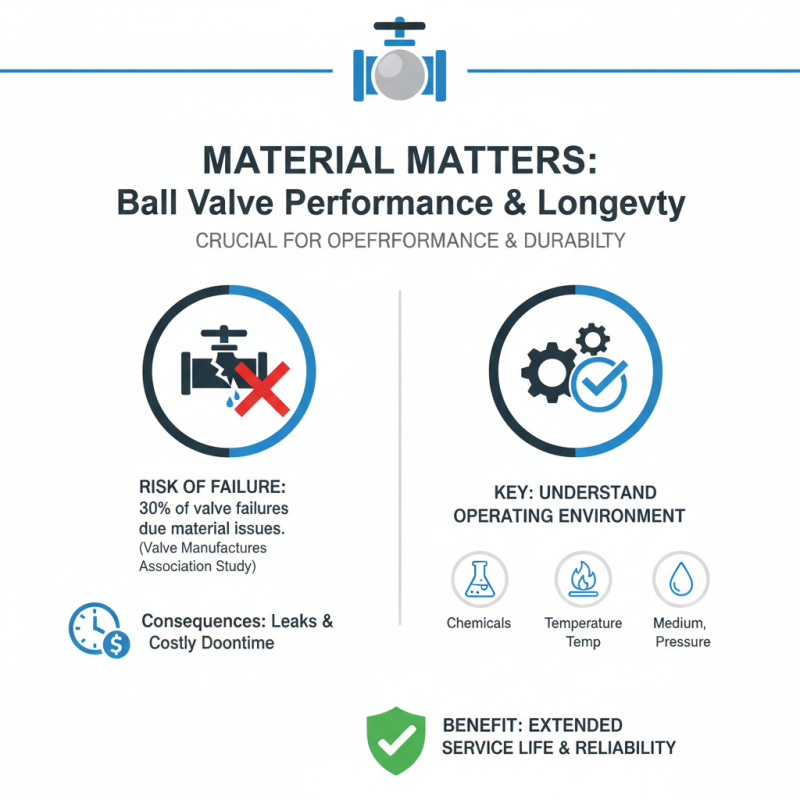
When selecting a ball valve, the choice of material is crucial for optimal performance and durability. Research indicates that valve failures often stem from inadequate material selection, leading to leaks and costly downtime. A study by the Valve Manufacturers Association highlights that nearly 30% of valve-related failures are attributed to material issues. Thus, understanding the environment in which the valve will operate is essential.
Different materials offer distinct properties. For example, stainless steel provides excellent corrosion resistance but may not be suitable for high-temperature applications. In contrast, plastic valves are lightweight and resist corrosion, but they can be less durable under extreme conditions. Factors such as pressure ratings, temperature ranges, and fluid compatibility should guide material choice.
**Tip:** Always request data sheets from manufacturers. These include material specifications and performance metrics.
Correctly assessing your needs might prevent unforeseen complications later on. A common mistake is underestimating the impact of environmental factors. Regular inspections and maintenance can prolong a valve’s lifespan significantly. Remember, sometimes the initial cost of higher-quality materials can save money in the long run through reduced maintenance and longer service life.
**Tip:** Review case studies relevant to your industry. They provide valuable insights into material performance in real-world applications.
Evaluating Sizing and Flow Requirements for Optimal Ball Valve Efficiency
Choosing the right ball valve requires careful consideration of your specific needs. Sizing and flow requirements are critical factors. An improperly sized valve can lead to reduced efficiency and increased operational costs. It's essential to measure the pipe diameter accurately. A valve that is too small may restrict flow, while one that is too large can prevent proper sealing.
Understanding the flow requirements is equally important. Different applications can demand varying flow rates. Evaluate the desired flow rate against the valve's capacity. Remember, high flow isn't always better. Sometimes, achieving the right balance is more crucial. Consider the pressure drop; excessive drop can indicate inefficiency.
Installation also plays a role in valve performance. Ensure that the flow direction is correct and that your piping layout supports smooth flow. Mistakes in installation can lead to future issues. Regular maintenance checks are vital, even for a well-chosen valve. Over time, wear and tear can affect performance. Reflecting on past experiences can guide you in making smarter choices.
2026 How to Choose the Right Ball Valve for Your Needs? - Evaluating Sizing and Flow Requirements for Optimal Ball Valve Efficiency
| Valve Size (inches) |
Flow Coefficient (Cv) |
Operating Pressure (psi) |
Material Type |
Temperature Range (°F) |
| 1 |
30 |
150 |
Brass |
-20 to 150 |
| 2 |
60 |
300 |
Stainless Steel |
-30 to 180 |
| 3 |
120 |
600 |
PVC |
-10 to 140 |
| 4 |
200 |
800 |
Carbon Steel |
0 to 200 |
Insights on Maintenance and Troubleshooting for Ball Valves in Use
Ball valves are vital components in various industrial systems. Proper maintenance ensures their reliability and longevity. Regular checks can prevent common issues. Leaks can occur due to wear and tear. It’s essential to inspect seals and seats frequently. A small crack can lead to significant problems.
Tips: Identify signs of wear early. Use the right lubricants for the valve type. Keeping a clean environment around the valve extends its life.
When troubleshooting, start with a thorough visual inspection. Look for corrosion or buildup. Sometimes a simple cleaning fixes performance issues. If a valve doesn’t close properly, it may need adjustment. Misalignment is a common culprit.
Remember, not all problems have straightforward fixes. Each valve type has unique challenges. Understanding the system can save time and money. Always document the maintenance process. This practice helps in identifying patterns over time. Proper record-keeping aids in future troubleshooting efforts.