What is Compression Fittings and How Do They Work?
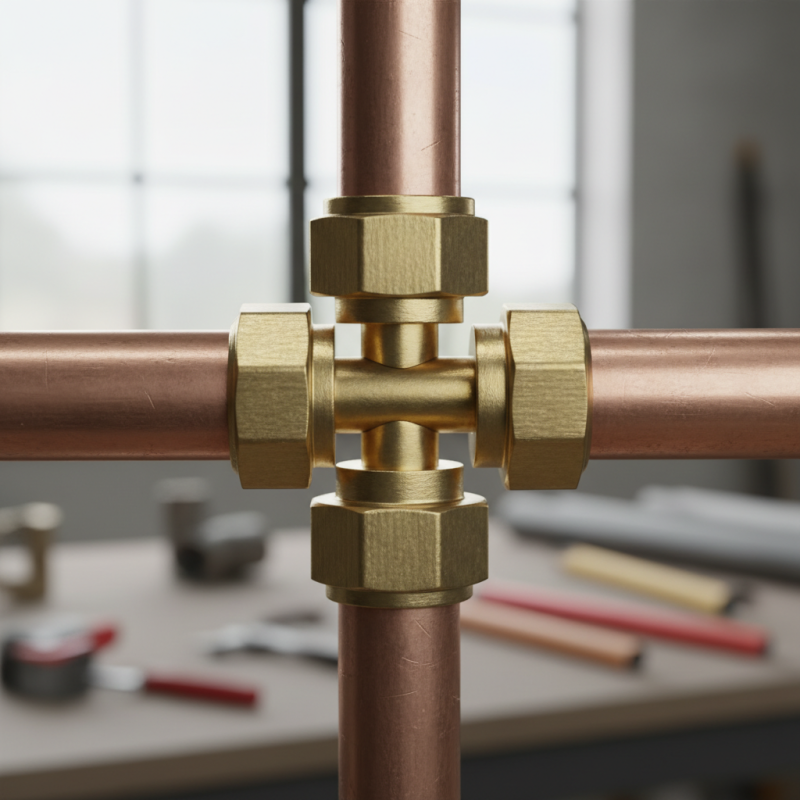
Compression fittings are essential components in piping systems. They create a leak-tight seal between two pipe ends or tubes. Made of materials like brass or plastic, they offer durability and reliability.
These fittings work by compressing a ferrule against the pipe or tube surface. This compression occurs when the nut is tightened. Proper installation is key to prevent leaks. It requires the right tools and skills. A poorly installed fitting can lead to serious problems.
Understanding compression fittings can enhance your plumbing skills. However, mistakes can happen. Over-tightening can damage the fitting or the pipe. Sometimes, learning from these errors leads to better practices. With the right knowledge, you can ensure a secure and efficient plumbing system.
Definition of Compression Fittings and Their Applications
Compression fittings are essential components used in various piping and plumbing applications. They create a secure connection between two pipes or tubes by compressing a ring around the pipe. This helps prevent leaks and ensures a tight fit. Commonly used in water supply lines, HVAC systems, and gas lines, these fittings are versatile and user-friendly.
When working with compression fittings, ensure you select the right size. Using incorrect sizes can lead to leaks or pipe damage. Apply the fitting carefully. Over-tightening can cause stress and lead to failure. It’s crucial to check for proper alignment. Misalignment can result in ineffective seals. A small mistake can lead to bigger issues down the line.
Tips: Always keep a few spare parts handy. They can save you time during repairs. Regularly inspect your fittings for wear and tear. Early detection can prevent major problems. Keep your workspace organized. A tidy area helps avoid mishaps and losses.
Components of Compression Fittings: Understanding Each Part
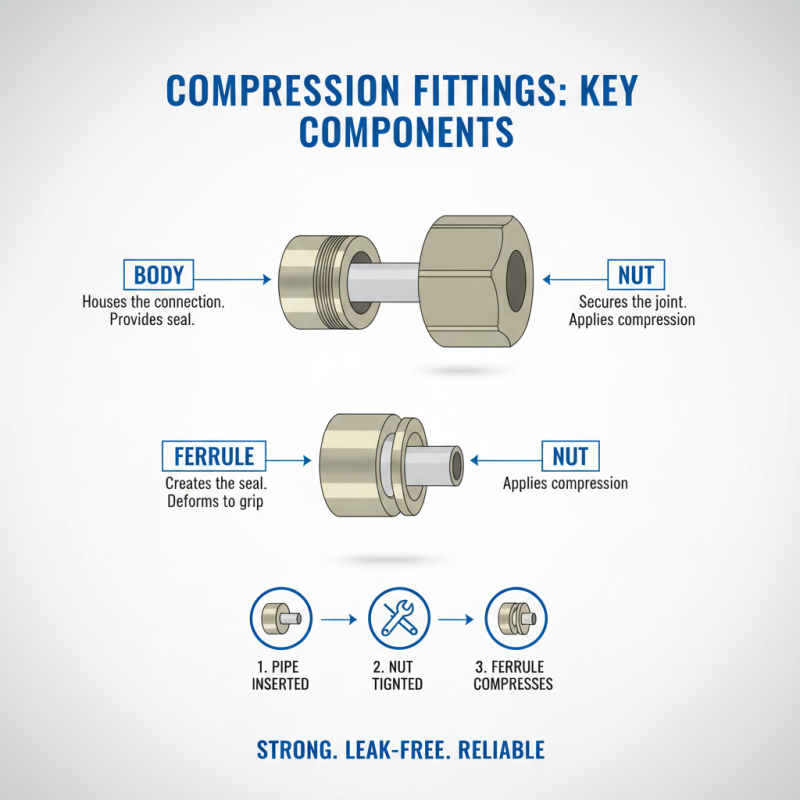
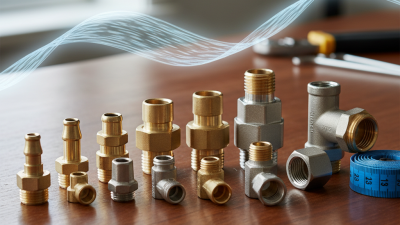
Compression fittings play a crucial role in connecting pipes and tubing. Understanding their components is essential for effective installation and maintenance. The main parts are the body, nut, and ferrule. Each part has a specific function in the compression process.
The body serves as the fitting's core. It provides a sturdy structure that holds everything in place. The nut screws onto the body, allowing for adjustments. This is where some users often struggle. Tightening too much can damage the fitting. The ferrule, typically a ring, compresses against the pipe when the nut is tightened. This creates a seal that prevents leaks. However, if the ferrule is not aligned properly, it may lead to ineffective sealing.
Attention to detail is crucial during assembly. Even slight misalignments can result in failure. Regular checks are important to ensure long-term functionality. Many overlook the importance of periodic inspections. Such oversights can lead to costly repairs later on. Understanding the role of each component helps users avoid these mistakes.
How Compression Fittings Create a Secure Seal
Compression fittings are essential components in plumbing and piping systems. They provide a reliable way to connect pipes without welding or soldering. The design is simple yet effective. A compression fitting consists of a nut, a ring, and a fitting body. When tightened, the nut compresses the ring against the pipe, creating a strong seal.
This compression creates a secure barrier against leaks. The process requires the right amount of torque. Too little tightening may lead to leaks, while too much can damage the fitting. Understanding the correct tension is crucial. Over time, materials can expand and contract, potentially loosening the fit. Regular checks are recommended to ensure a tight seal.
One common oversight is to neglect the fitting's condition. Old or damaged fittings must be replaced. Signs of wear can compromise the entire system. A small crack or dulling of the surface may go unnoticed until a leak occurs. Taking proactive measures can save time and resources.
Steps to Properly Install Compression Fittings
Installing compression fittings requires attention to detail. Start by gathering your tools: a pipe cutter, deburring tool, and adjustable wrench. Make sure the pipe ends are clean. Deburr any rough edges to avoid damage during installation. Take your time here. A small mistake can lead to leaks.
Next, slide the compression nut over the pipe, followed by the ring. Position them correctly before inserting the pipe into the fitting. Avoid rushing this step. It’s crucial for achieving a tight seal. Hand-tighten the nut first, ensuring everything is aligned. Then, use the wrench to secure it. But don’t overtighten. That can create problems later.
After installation, check for leaks. Turn on the water slowly and observe. Even a tiny drip can indicate an issue. It’s wise to recheck your work. If something feels off, don’t hesitate to redo it. A secure fitting is crucial for any plumbing project. Embrace the learning process. Each installation gets easier with practice.
What is Compression Fittings and How Do They Work? - Steps to Properly Install Compression Fittings
| Aspect |
Description |
| Definition |
Compression fittings are plumbing fixtures that connect two or more pipes together using a compression mechanism. |
| Components |
Typically consist of a nut, a ring (ferrule), and a body that holds the pipes in place. |
| Applications |
Used in various plumbing applications including water supply lines, gas lines, and refrigeration systems. |
| Installation Steps |
1. Cut the pipe to the desired length.
2. Slide the nut onto the pipe.
3. Add the ring (ferrule).
4. Insert the pipe into the fitting.
5. Tighten the nut to compress the ferrule and seal the connection. |
| Advantages |
Ease of installation, no special tools required, reusable, and they provide a strong leak-proof seal. |
| Disadvantages |
Potential for leaks if not installed correctly and may require periodic tightening. |
Common Issues and Solutions with Compression Fittings
Compression fittings are widely used in plumbing and HVAC systems. They create a tight seal by compressing a ring against the pipe when the nut is tightened. However, several issues can arise when using these fittings.
One common problem is leaks. If a fitting is not tightened enough, it may not seal properly. Water can escape and cause damage over time. Excessive tightening can also lead to cracking. It's essential to find a balance. Using thread sealant can help in some cases. This extra layer can prevent leaks and offers additional security.
Another issue is corrosion, especially with metal fittings. Over time, rust can develop and weaken the fitting. Regular inspections are crucial. If you notice discoloration or rust, consider replacing the fitting. Sometimes, a simple replacement can prevent bigger problems. Being proactive can save time and money in the long run. Recognizing these common issues makes maintenance easier.