What Are Quick And Easy Fittings?
Quick And Easy Fittings are designed to connect components with less effort and less downtime. You may find them in workshop air lines, fluid systems, garden equipment, and industrial machinery. Their appeal is easy to see: a worker aligns two ends, locks the coupling, and returns to the task. But speed alone is not enough. A poor fit can leak, loosen, or make routine maintenance harder.
The market context is substantial, though it needs careful interpretation. Grand View Research estimated the global pipe fittings market at USD 14.3 billion in 2022 and projected a 4.2% compound annual growth rate from 2023 to 2030. That report covers pipe fittings broadly; it does not measure quick-connect products alone. Still, it shows why connection design matters across construction, manufacturing, and infrastructure. Small components carry real consequences.
Good fittings should feel simple in the hand. The release sleeve should move cleanly. The seal should sit evenly, without a twist or a visible gap. As design researcher Don Norman writes, “Good design is actually a lot harder to notice than poor design.” His work is not specific to fittings, but the principle applies: intuitive hardware reduces avoidable mistakes. That is not a substitute for pressure ratings, material compatibility, or manufacturer instructions. A quick connection can still be the wrong connection. This guide explains how Quick And Easy Fittings work, where they are useful, and what to check before choosing one. It also leaves room for a practical truth: “easy” depends on the user, the tool, and the conditions on site.

What Quick-and-Easy Fittings Are: Push-to-Connect Design and Main Components
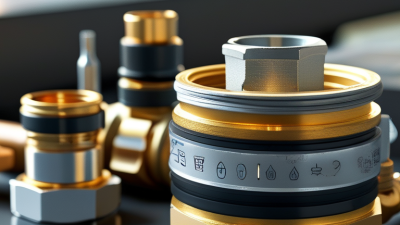
Quick-and-easy fittings use a push-to-connect design: insert a compatible tube, and an internal seal grips it without a separate clamp. The main components are a fitting body, collet, release ring, O-ring, and tube stop. The body houses the parts and connects to a threaded port or another line. The collet’s small teeth hold the tube; the O-ring seals around its outer surface. The tube stop helps position the tube at the sealing point. A firm push should seat the tube, but a tug test is still sensible.
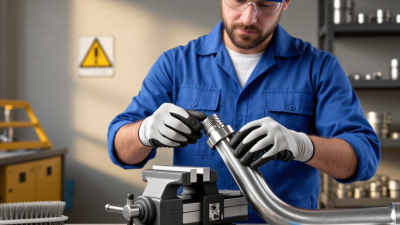
For removal, press the release ring toward the fitting body while pulling the tube straight out. Angled pulling can score the tube or disturb the seal. Check that the tube end is clean, square-cut, and within the fitting’s specified diameter and pressure range. Materials and ratings vary, so a fitting that works on a low-pressure air line may not suit another fluid or temperature. The U.S. Department of Energy’s Improving Compressed Air System Performance guide estimates that leaks can waste 20–30% of compressor output in poorly maintained systems. That figure covers system-wide leakage, not fittings alone, but it shows why checking connections matters. Push-to-connect is convenient. It is not foolproof.
How the Locking Mechanism Works: Collets, Seals, and Tube Retention
What Are Quick And Easy Fittings?
A push-to-connect fitting looks simple, but its small parts do important work. Inside, a collet grips the tube while a seal, often an O-ring, helps prevent leaks. Push the tube in firmly and the collet’s teeth hold it against outward movement. The seal presses around the tube’s surface. That’s the basic idea.
Fit depends on careful preparation. Cut the tube square, then check its end for burrs, cracks, or dirt. A rough edge can damage the seal; a shallow insertion may leave too little tube for the collet to retain. Push until the tube reaches its internal stop, then give it a gentle pull to check engagement. It can feel secure and still be misaligned, so don’t skip inspection.
Tips: Use tubing that matches the fitting’s specified size and material. Check pressure and temperature limits before use. To disconnect, isolate and depressurize the line, then press the release collar evenly while withdrawing the tube. Small details matter here; I’ve found that rushing the cut is an easy mistake to make.
Pneumatic and Hydraulic Types: ISO 14743 and ISO 7241 Standards
Quick fittings connect fluid lines without threaded assembly at every changeover. For pneumatic circuits, ISO 14743 covers push-in connectors used with thermoplastic tubing. It sets requirements and test methods, but it does not make every connector suitable for every pressure, tube material, or environment. Check the marked working pressure and temperature against the actual system. A crisp click helps. It is not proof of a leak-free seal.
Hydraulic quick-action couplings follow ISO 7241, which specifies two coupling series, A and B, including interface dimensions and performance requirements. Matching series matters: a coupling that looks right may still fail to mate or perform safely. Before connection, relieve trapped pressure, inspect the mating faces, and keep dirt away from the seal. Small grit can matter. Published pressure ratings are component limits, not a guarantee for a whole assembly.
Market figures show why these details matter at scale. Grand View Research’s 2024 Pneumatic Equipment Market report estimated the global market at USD 14.3 billion in 2023 and projected 7.1% annual growth through 2030. That figure covers pneumatic equipment broadly, not fittings alone. Still, more installed equipment means more connections to select, inspect, and maintain. One practical caution: standards help define compatibility, but operating conditions deserve a second look.
Key Specifications: Working Pressure, Temperature, Media, and Tube Size
What Are Quick And Easy Fittings?
Key Specifications: Working Pressure, Temperature, Media, and Tube Size
Quick fittings can make assembly faster, but “quick” should never mean guesswork. Check the fitting’s rated working pressure against the system’s normal pressure and any startup surges. The U.S. Department of Energy’s Improving Compressed Air System Performance sourcebook reports that leaks can waste 20–30% of compressor output in some systems. A loose or mismatched connection is a small part with a costly effect. Small detail. Big consequence. Temperature matters too: heat can soften seals, while cold can make some materials less flexible. Confirm the fitting’s pressure rating at your actual operating temperature, not just at room temperature.
Next, match the fitting material and seal to the media. Water, oil, air, and process chemicals can affect materials differently. For compressed air, ISO 8573-1:2010 sets a Class 1 total-oil limit of 0.01 mg/m³. That air-quality figure does not certify a fitting’s chemical compatibility; check the fitting specification separately. Tube size must also match precisely. Measure the tube’s outside diameter, rather than relying on appearance or a nominal label. A tube that seems close may still leak or pull free under load. I have seen selection charts make this look simpler than it is; verify the full pressure, temperature, media, and size range before installation.
Selection and Installation: Check Ratings, Compatibility, and Leak Tightness
Quick and easy fittings can save time, but only when their ratings match the job.
Check the maximum working pressure and temperature on the fitting’s documentation. Also confirm that the listed limits suit the fluid or gas being carried. A fitting rated for water may not be suitable for another medium.
Small details matter.
Compatibility is just as important.
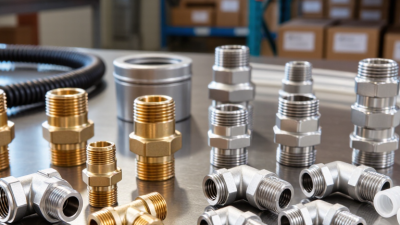
Compare the tube’s outside diameter, thread type, and seal design with the fitting. Similar-looking threads may not mate correctly. I still find this easy to overlook when replacing a part in a cramped cabinet. Check the connection against the equipment instructions, and avoid forcing components that resist turning.
A snug fit should not require guesswork.
Before installation, shut off the supply and release trapped pressure where appropriate.
Cut tubing squarely, remove burrs, and seat it fully according to the fitting instructions. Do not compensate for a poor fit by overtightening; this can damage threads or seals. Then restore pressure gradually. Wipe the joint dry and check it with a tissue for moisture. Watch it again after the system has run.
Even a tiny leak deserves another look.