How to Choose Brass Fittings in 2026?
Choosing Brass Fittings in 2026 means looking beyond a polished surface. A fitting must match the fluid, pressure, temperature, connection type, and maintenance demands of its actual setting. A small mismatch can show up later as a leak beneath a sink, corrosion around a thread, or an avoidable replacement. Details matter.
The U.S. Geological Survey’s Mineral Commodity Summaries 2025 reports estimated global copper mine production of about 23 million metric tons in 2024. That figure describes upstream supply, not the Brass Fittings market, but it highlights the importance of understanding the metal behind the product. Copper Development Association guidance also explains how brass alloy composition affects properties such as strength and machinability. Buyers should still verify each product’s alloy, dimensions, pressure rating, and manufacturer documentation. Labels alone are not enough.
A sound choice starts with the application. Will the fitting carry potable water, compressed air, or another compatible service? Is the connection threaded, compression-based, or designed for a specific tube? Check installation space, seal requirements, and exposure to moisture or chemicals. Then compare traceable product data, not just price. Small checks. Fewer surprises.
No source material was provided to verify a named expert’s exact quotation, so I have not invented one. Add a sourced, attributable expert quote before publication to strengthen this introduction’s authority.
Define the Application and Required Fitting Specifications
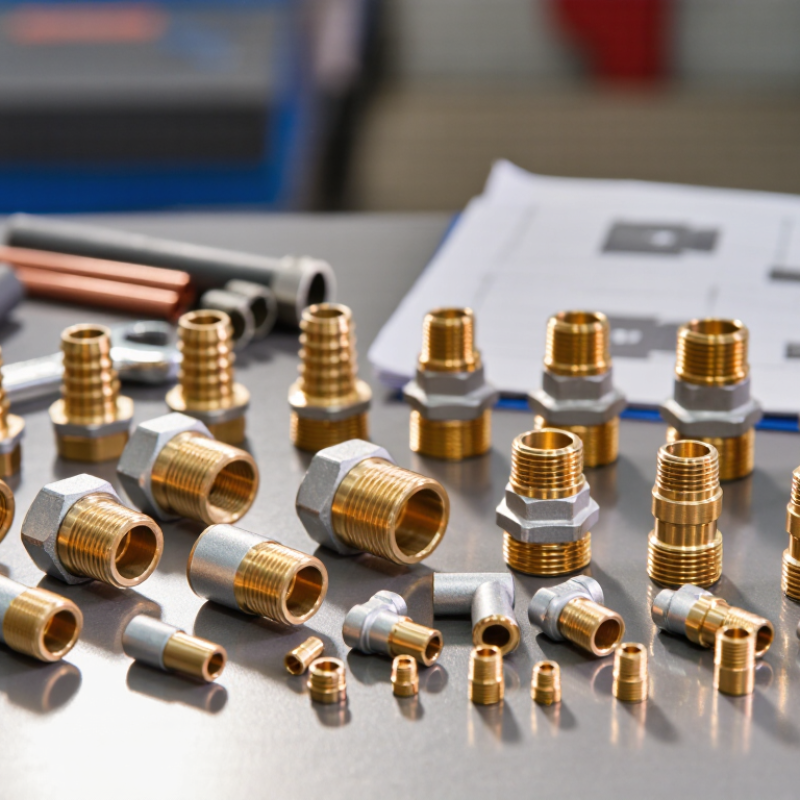
Before choosing a brass fitting, define the service clearly: fluid, operating pressure, temperature range, and connection type. A fitting for cold water may not suit hot water, compressed air, or a system with frequent pressure changes. Record the pipe size and whether the joint must be threaded, soldered, or compression-connected. Also check the fitting’s material and pressure-temperature ratings against the system’s actual conditions. ASME B16.15 covers cast copper-alloy threaded fittings in Classes 125 and 250; these class numbers are not direct working-pressure ratings. Details matter.
Flow rate can shape the choice too. The Copper Development Association’s Copper Tube Handbook recommends maximum water velocities of about 8 ft/s for cold water and 5 ft/s for hot water, helping limit erosion-corrosion in copper-tube systems. Use those figures as a design check, not a substitute for project-specific calculations. Consider water chemistry, vibration, and installation access as well. A compact fitting can look convenient on a drawing, yet be awkward to tighten beside a wall. That detail is easy to miss. I would verify the exact alloy, joining method, and manufacturer-independent test documentation before specifying the part.
Compare Brass Alloys, Grades, and Applicable Standards
How to Choose Brass Fittings in 2026?
Compare Brass Alloys, Grades, and Applicable Standards
Start with the fluid, pressure, temperature, and connection type—not a familiar alloy name. Copper Development Association composition data lists C36000 brass at 60–63% copper and 2.5–3.7% lead. Its machinability suits precision-cut parts, but it may not meet lead-content requirements for potable-water applications. Check the applicable specification and local requirements. Alloy labels alone are not enough.
For water systems, compare dezincification-resistant and low-lead grades, then confirm their published limits and approvals. A fitting exposed to salty air or aggressive water may need different corrosion performance than one carrying dry air indoors. Small details matter. A bright surface tells you little about long-term suitability. That is easy to overlook.
Match the fitting itself to its governing standard. ASME B16.18 covers cast copper-alloy solder-joint pressure fittings; ASME B16.22 covers wrought solder-joint fittings, while B16.15 addresses threaded fittings. EN 1254 covers copper-alloy plumbing fittings. Standards vary by product type and connection, so check the current edition and specified pressure-temperature ratings. Review material certificates, dimensions, and installation instructions, too. A sound grade can still fail in a poorly matched system.
Select the Fitting Type and Connection Method
Select the fitting body and connection together. A brass elbow may solve a tight turn, while a tee adds a branch; neither is right if its connection mismatches the tube. For copper tubing, consider solder-joint fittings. For serviceable assemblies, compression or threaded connections may be easier to inspect and dismantle. Fit first. Check the tube’s actual outside diameter, fluid, temperature, pressure, and available tool clearance.
Standards help narrow the choice. ASME B16.15 covers cast copper-alloy threaded fittings in Classes 125 and 250; ASME B16.18 and B16.22 cover solder-joint pressure fittings. Those class labels are not a universal working-pressure guarantee. Confirm the specific fitting’s pressure-temperature limits and compatibility with the tube and fluid. The Copper Development Association’s Copper Tube Handbook also provides technical guidance on copper tube joining methods. Keep that reference nearby when comparing soldered, threaded, and compression joints.
On a cramped sink line, a compression nut may be simpler to reach than a torch joint. In a vibrating assembly, check whether the selected connection is suitable for movement, rather than assuming brass makes it secure. I still double-check thread type and sealing method; that detail is easy to miss. Test the finished assembly under the system’s specified conditions, and record the fitting type for future maintenance.
Check Pressure, Temperature, and Fluid Compatibility
When choosing brass fittings, start with the system’s actual pressure, not just its usual gauge reading. Include short pressure spikes during start-up, valve closure, or water hammer. Compare the fitting’s working-pressure rating with the highest credible system pressure, and leave a sensible margin. A gauge can miss brief surges. Check the rating at operating temperature, too; allowable pressure may decrease as temperature rises. Hot water and warm process lines should not be judged by room-temperature figures alone.
Identify the fluid and any additives before selecting an alloy. Brass suits many applications, but compatibility depends on the alloy, fluid chemistry, concentration, and exposure time. Chlorides, acidic cleaners, and some treatment chemicals can cause problems under certain conditions. Check technical data for the actual fluid and temperature. I would not treat “brass is suitable” as a complete answer. Inspect the seals as well: a compatible fitting body does not guarantee a compatible O-ring. Match the thread and sealing method, then check for leaks after installation. It sounds obvious. It is often missed. If the service conditions are unclear, get the fitting’s ratings confirmed before installation.
Verify Quality, Certification, and Service Requirements
How to Choose Brass Fittings in 2026?
Verify Quality, Certification, and Service Requirements
A clean finish is not proof of a reliable fitting. Check the alloy specification, pressure rating, temperature range, and connection dimensions against the actual system. For drinking-water use, verify certification to NSF/ANSI/CAN 61 for health effects and applicable lead-content requirements. The U.S. EPA defines lead-free plumbing products as having a weighted average of no more than 0.25% lead across wetted surfaces; solder and flux are limited to 0.2%. Ask for the certificate and confirm it covers the exact fitting, not merely the supplier’s product family. Small details matter.
Certification is only part of the check. Compare the fitting’s pressure and temperature ratings with the system’s operating conditions, including brief pressure surges. Confirm thread type and sealing method; a near-match can still leak. For hot-water or aggressive-water service, ask about dezincification resistance and material test documentation. Review the manufacturer’s published installation instructions, traceability details, and warranty terms before ordering. Not just the stamp. A stamped marking that cannot be matched to a current certificate is weak evidence. Keep the paperwork with maintenance records, and revisit the choice if water chemistry or service conditions change. A cautious extra check may feel slow, but replacing a hidden joint later is worse.
How to Choose Brass Fittings in 2026
Suggested Buyer Evaluation Priorities
Use this suggested 100-point framework to compare fittings: prioritize applicable certifications and material traceability, then check pressure and temperature ratings against your system requirements, along with service and spare-parts support. These percentages are buyer-priority suggestions, not survey results or regulatory requirements. For potable-water use, verify applicable local approvals and documentation, such as NSF/ANSI/CAN 61 and NSF/ANSI 372 where relevant.