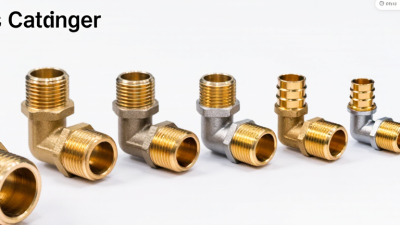
Why Choose PVC Pipe Fittings for Your Project?
Choosing Pvc Pipe Fittings can make sense when a project needs corrosion resistance, dependable flow, and straightforward installation. The choice still depends on the application. Water chemistry, pressure, temperature, and connection type all matter. A fitting that suits a garden irrigation line may not suit a demanding industrial system. Small details count, including clean cuts, compatible joining materials, and supported pipe runs.
Industry data helps put material choices in context. PlasticsEurope’s Plastics—The Facts 2023 report estimated global plastics production at 400.3 million tonnes in 2022. That figure describes the scale of plastics use; it does not prove that PVC is right for every project. For service-life context, the Uni-Bell PVC Pipe Association summarizes engineering research indicating that properly designed and installed PVC pipe systems can have long useful lives. This evidence concerns pipe systems, however, and should not be treated as a guarantee for every fitting, installation, or operating condition.
There are trade-offs. PVC fittings are lightweight and resist many common forms of corrosion, but impact, heat, chemical exposure, and installation errors can affect performance. Not automatic. Before selecting a fitting, check the manufacturer’s pressure and temperature ratings, product specifications, and compatibility with the pipe and joining method. A careful specification can prevent leaks behind a wall or beneath a path, where repairs become expensive. The practical answer is not simply “PVC is best.” It is that Pvc Pipe Fittings may offer a durable, economical option when their ratings and limitations match the project.
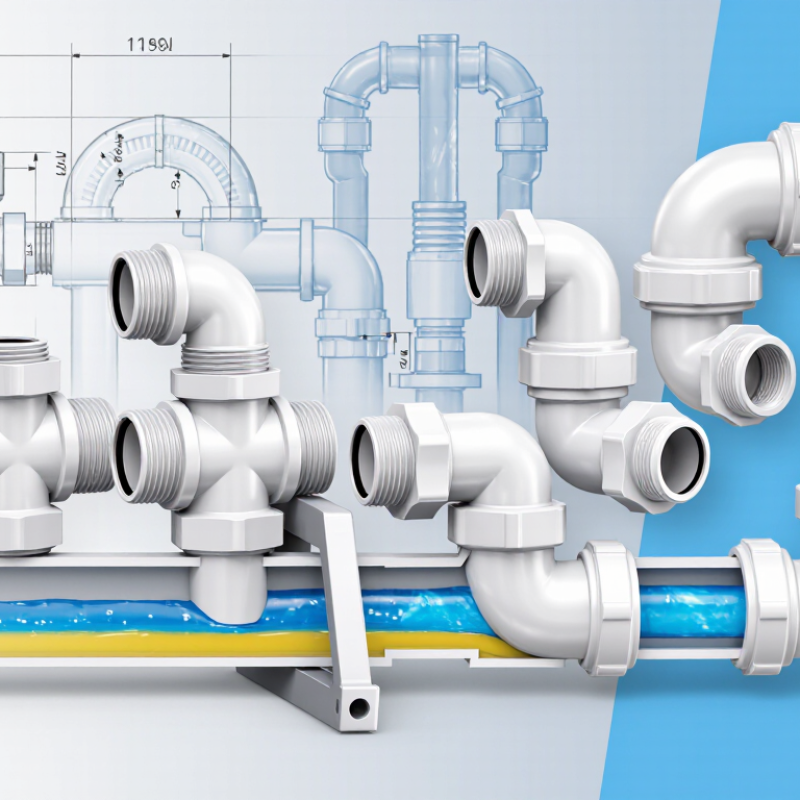
PVC Fittings Defined: ASTM D2466 Covers Schedule 40 Pressure Fittings
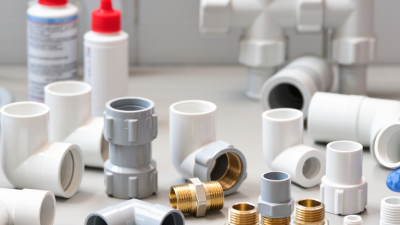
PVC fittings are molded connectors for PVC pressure pipe, including elbows, tees, couplings, and adapters. ASTM D2466 specifies Schedule 40 PVC fittings, including dimensional and performance requirements. That matters at the joint: a socket that is oversized or poorly aligned can compromise solvent-cement contact.
The dimensions are practical, not abstract. ASTM D1785 lists a 1-inch Schedule 40 pipe with a 1.315-inch outside diameter and a 0.133-inch minimum wall thickness. Match fittings to the pipe’s nominal size and applicable standard; nominal size is not the pipe’s measured outside diameter. Fit matters. ASTM standards define requirements, but they do not replace checking the system’s design pressure, fluid, and operating temperature.
For project selection, consult the current ASTM D2466 and D1785 specifications alongside the fitting supplier’s published technical data. Pressure capacity depends on size, temperature, and the complete assembly—not the fitting label alone. PVC pressure ratings commonly use 73°F (23°C) as a reference condition; higher temperatures can reduce allowable pressure. Check the actual service conditions. Solvent-cemented joints also need clean, dry surfaces and adequate curing time before pressure testing. A rushed installation can undo a correctly specified fitting.
Pressure Classes: ASTM D2466 and D2467 Cover Schedule 40 and 80
Why Choose PVC Pipe Fittings for Your Project?
Pressure class matters when choosing PVC fittings. ASTM D2466 covers Schedule 40 PVC pressure fittings, while ASTM D2467 covers Schedule 80. Schedule 80 fittings generally have thicker walls, which can support higher pressure ratings for comparable sizes. However, the standard alone does not tell you the safe working pressure of every assembled system. Ratings depend on fitting size, operating temperature, and connected pipe. Heat can reduce pressure capacity. Small details matter.
It is easy to assume that a Schedule 80 fitting automatically makes a line suitable for higher pressure. That can be a costly mistake. Check the fitting’s published pressure rating and confirm it matches the pipe, fluid, and operating conditions. Also verify that the fitting is intended for the service and installation method you plan to use. Solvent-cement joints need clean, properly prepared surfaces and enough curing time. Rushing that step can undermine an otherwise sound selection.
Tips: Compare ratings at your actual operating temperature, not just room temperature. Check every component in the assembly, including valves and adapters. If the design leaves uncertainty, pause and confirm the specifications with a qualified piping professional. It is better to recheck than to guess.
Material Strength: Many PVC 1120 Compounds Have a 4,000-psi HDB at 73°F
PVC pipe fittings can be a practical choice when a project needs corrosion resistance, low weight, and dependable pressure performance. Many PVC 1120 compounds have a hydrostatic design basis (HDB) of 4,000 psi at 73°F. That figure describes a material strength reference under specified conditions. It is not the fitting’s allowable operating pressure.
The distinction matters. A system’s pressure limit also depends on pipe size, wall thickness, fitting design, joint method, and water temperature. For example, a line carrying warm water may need a lower pressure allowance than the same assembly operating at 73°F. Check the manufacturer’s technical data and applicable project specifications before choosing components. Small details count.
PVC’s smooth interior can help maintain flow, while its light weight makes handling and installation easier. Still, an impressive HDB value can be easy to overread. I would treat it as one useful data point, not a shortcut for sizing the whole system. Confirm that every fitting matches the pipe, service conditions, and intended pressure. That extra check can feel tedious, but it is where a sound material choice becomes a suitable installation.
Why Choose PVC Pipe Fittings for Your Project? — Material Strength: Many PVC 1120 Compounds Have a 4,000-psi HDB at 73°F
| Material Consideration |
Reference Information |
Why It Matters for a Project |
| Hydrostatic Design Basis (HDB) |
Many PVC 1120 compounds have an HDB of 4,000 psi at 73°F (23°C). |
HDB is a long-term material-strength classification used in pressure-design calculations; it is not the fitting’s allowable operating pressure. |
| Reference temperature |
73°F (23°C) |
Pressure capacity can change with operating temperature. Check the applicable temperature derating guidance for the specific piping system. |
| HDB test method |
ASTM D2837 establishes the method for determining the hydrostatic design basis of thermoplastic pipe materials. |
Use the material’s documented classification and the governing product standard when evaluating a system. |
| Pressure rating |
The rated pressure depends on factors such as material basis, pipe or fitting dimensions, design factor, temperature, and the applicable standard. |
Confirm the published pressure rating for the actual fitting and intended service rather than treating HDB as a direct pressure rating. |
| System compatibility |
Compatibility depends on fitting dimensions, joining method, pipe specification, and the fluid being conveyed. |
Verify that all system components are specified for the same service conditions and are installed according to applicable requirements. |
| Project verification |
Material classifications and ratings can vary by formulation and product specification. |
Review current technical documentation and local code requirements before selecting fittings for a pressure application. |
Chemical Resistance: PVC Suits Many Acid, Alkali, and Salt-Water Applications
PVC pipe fittings can handle many chemical environments that quickly damage ordinary metal components. Their resistance often makes them suitable for dilute acids, alkalis, and salt-water systems. The material does not rust. That can simplify maintenance in dosing lines, wash areas, and coastal installations. However, compatibility depends on chemical concentration, temperature, and exposure time. Concentrated solutions or hot fluids may change the answer.
Tips: Check a chemical compatibility chart before installation, and confirm the rating for the exact concentration and operating temperature. Include seals, valves, and joining materials in that check; the fitting is only one part of the system. If conditions are unusual, ask a qualified supplier or engineer to review them. Small details matter.
During installation, keep fittings clean and avoid forcing threaded connections. Excessive tightening can crack plastic, sometimes without an obvious warning. Inspect joints for leaks after the system reaches normal operating pressure. A fitting may look sound while a seal or connection is not. PVC also resists many acids and salts, but it is not compatible with every solvent or process fluid. I would not treat “chemical resistant” as a universal guarantee; actual service conditions deserve a careful check.
Temperature and Joining: PVC Pressure Ratings Typically End at 140°F (60°C)
PVC pressure fittings can suit cold-water and moderate-temperature systems, but temperature changes their pressure capacity. Many PVC pressure ratings are stated for water near 73°F (23°C), while typical pressure applications stop around 140°F (60°C). That is an upper limit, not a comfortable design target. As fluid temperature rises, allowable working pressure falls. Check the fitting and pipe manufacturer’s temperature-derating chart, then size the system for its actual operating conditions. A chart can seem straightforward, yet it may not capture every brief heat spike or unusual duty cycle.
Joining matters, too. Solvent-cement joints need compatible materials, clean, dry surfaces, and enough curing time before pressure testing. Warm conditions can shorten working time; cold conditions can slow curing. Follow the product instructions and account for pipe size, humidity, and temperature. Do not assume a joint is ready because it feels firm. It may not be. Inspect alignment and insertion depth while assembling, since corrections become difficult after the cement sets. It is easy to focus on the fitting’s printed pressure rating and overlook the joint, which must handle the same heat and pressure. For hotter service, or when operating close to 140°F, verify suitability with current technical data or choose a material rated for the conditions.
PVC Pipe Fittings: Temperature Benchmarks
PVC pressure ratings are commonly referenced at 73°F (23°C) and typically end at a maximum service temperature of 140°F (60°C). The boiling point of water at sea level is shown for context—not as a PVC operating limit.
PVC pressure capacity decreases as temperature rises. Actual limits depend on the pipe and fitting specifications; check the product’s temperature and pressure ratings before use.