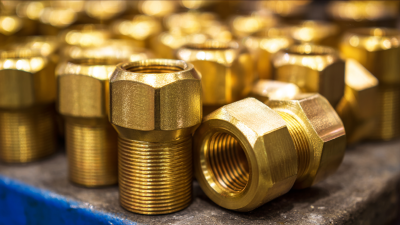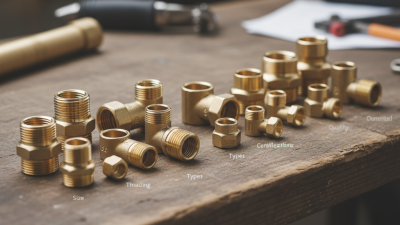
Top 10 Brass Elbow Manufacturers for Global Buyers

Choosing the right Brass Elbow manufacturer can protect a piping project from leaks, delays, and costly replacements. Global buyers need more than attractive catalog photos. They need evidence.

Materials scientist Michael F. Ashby writes, “Materials selection is a process of elimination.” That principle fits Brass Elbow sourcing well. Buyers should examine alloy grades, pressure ratings, thread accuracy, surface finish, and production consistency. A factory may offer CW617N brass, dezincification-resistant options, or lead-controlled materials. However, claims require verification through test reports, inspection records, and credible certifications. Small details matter. A rough thread can damage sealing tape. Poor machining can create a slow leak behind a wall.

This guide presents the Top 10 Brass Elbow Manufacturers for Global Buyers. It considers manufacturing experience, export capability, quality systems, customization, packaging, and customer support. It also looks beyond marketing language. Can the supplier provide samples quickly? Are dimensions checked with calibrated gauges? Does the company understand different connection standards? These questions expose practical strengths.

No ranking is perfect. Public information can be incomplete, and factory performance may change over time. A respected manufacturer still deserves an independent audit. Buyers should request recent inspection data, sample approvals, and clear warranty terms before placing large orders. Price alone is a weak compass. The most reliable supplier usually combines stable alloy control, repeatable machining, secure packaging, and responsive communication. This list offers a useful starting point, not a final verdict.
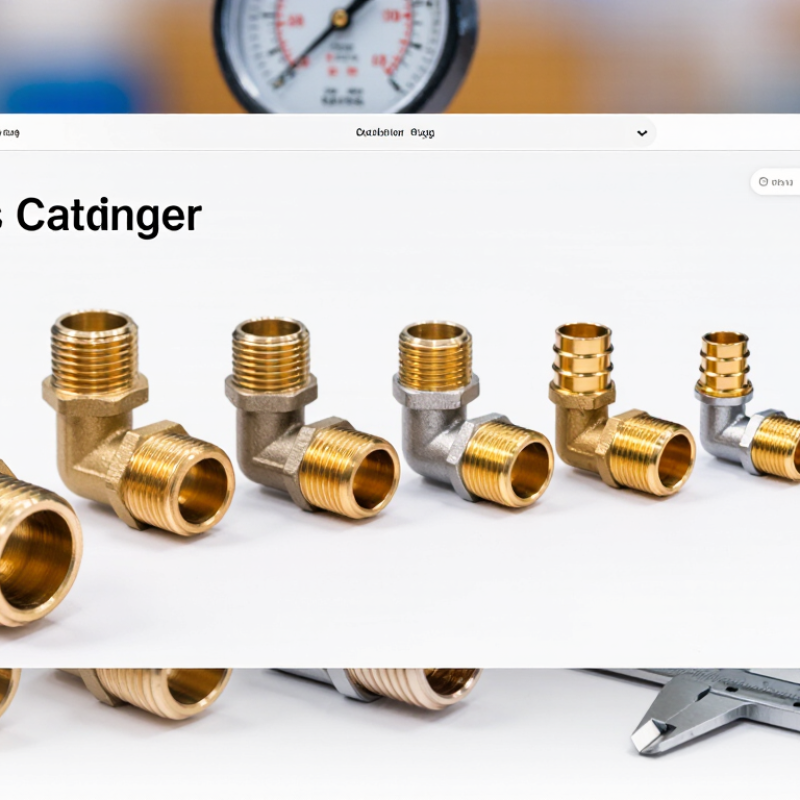
Top 10 Brass Elbow Manufacturers for Global Buyers

Brass Elbow Fittings: Types, Uses, and Global Market Overview

Brass elbow fittings redirect pipe runs while resisting corrosion, heat, and moderate mechanical stress. Common types include 45-degree elbows, 90-degree elbows, street elbows, and reducing elbows. Threaded versions suit maintenance-friendly systems. Compression and push-fit designs support faster installation where welding is unsuitable. Details matter.

These fittings appear in potable water lines, HVAC equipment, pneumatic controls, irrigation systems, and industrial instrumentation. Thread selection must match the connected pipe, sealant, pressure rating, and installation environment. A fitting that looks identical may perform differently because of wall thickness, alloy composition, or machining accuracy. Field checks should include thread gauges, dimensional measurements, surface inspection, and pressure testing.

The global market is fragmented. Buyers often compare suppliers across Asia, Europe, and North America by certification, production capacity, minimum order quantity, and delivery stability. Relevant documentation may include material reports, batch traceability, and region-specific drinking-water approvals. Market demand is moving toward lead-reduced alloys, recyclable packaging, and reliable small-batch production. However, certification labels alone are not enough. A polished catalog can hide inconsistent tolerances. This remains an uncomfortable sourcing risk. Buyers should request samples, inspect random batches, and clarify warranty terms before placing large orders. Shipping distance, customs procedures, and seasonal capacity can also change the real purchase cost.

Criteria for Evaluating Brass Elbow Manufacturers

Top 10 Brass Elbow Manufacturers for Global Buyers

Criteria for Evaluating Brass Elbow Manufacturers

Choosing a brass elbow manufacturer requires more than comparing prices. Material quality comes first. Ask for alloy specifications, dimensional reports, and recent pressure-test records. Reliable suppliers can explain brass composition, thread standards, and surface treatment without vague promises.

Check production consistency through samples. Measure thread fit, wall thickness, and sealing performance. A single excellent sample proves little. Request batch records and traceability documents for repeated orders. Factory experience also matters. Review machining capacity, inspection equipment, production staff training, and export packaging. Clear answers usually indicate stronger process control.

Communication deserves careful attention. A dependable manufacturer confirms tolerances, delivery schedules, carton details, and inspection procedures in writing. Independent audits can add confidence, although they may not reveal every weakness. I have seen attractive quotations hide slow feedback and unclear quality responsibility. That risk should not be ignored.

Tips: Compare at least three suppliers. Ask for a sample before signing a large order. Confirm the exact thread standard, pressure rating, and required dimensions. Inspect random pieces, not only selected samples. Keep every technical agreement in writing. Never treat a low price as quality evidence.

Top 10 Brass Elbow Manufacturers for Global Buyers - Criteria for Evaluating Brass Elbow Manufacturers

A practical, brand-neutral evaluation framework for comparing suppliers of brass threaded, compression and solder-joint elbows.

Rank Evaluation Dimension What Global Buyers Should Verify Relevant Standards or Evidence Suggested Weight Priority
1 Material Composition and Alloy Control Confirm the brass alloy designation, chemical composition, raw-material traceability and consistency between production lots. Ask for mill certificates or laboratory reports. Applicable EN, ASTM, JIS or GB alloy specification; positive material identification; batch certificates. 18% Critical
2 Dimensional Accuracy and Thread Quality Check thread type, pitch, engagement length, wall thickness, end-to-end dimensions and interchangeability with the buyer’s piping system. ISO 7-1 for pressure-tight pipe threads; ISO 228-1 for non-pressure-tight pipe threads; approved drawings and gauges. 14% Critical
3 Pressure and Leak-Test Performance Require documented test pressure, test medium, holding time, sampling plan and acceptance criteria for every relevant product family. Buyer-approved hydrostatic or pneumatic test procedure; inspection and test records; lot-based test reports. 14% Critical
4 Manufacturing Process and Quality System Evaluate forging, casting, machining, deburring, cleaning and inspection controls. Verify that nonconforming products are segregated and corrective actions are documented. Current ISO 9001 certificate; process flow charts; control plans; internal and third-party audit records. 12% High
5 Corrosion Resistance and Surface Finish Review resistance to dezincification, stress-related cracking, tarnishing and galvanic corrosion according to the installation environment. Material-specific corrosion test results; plating or coating specifications; visual standards; application suitability statement. 10% High
6 Compliance for Potable-Water Applications For drinking-water use, verify lead-release limits, alloy restrictions and product approval requirements in the destination market before purchase. NSF/ANSI/CAN 372 where applicable; destination-country drinking-water regulations; independent lead-release test reports. 10% Conditional
7 Product Range and Customization Capability Compare available sizes, thread systems, connection types, angles, special dimensions, private-label packaging and engineering support. Technical catalogue; approved drawings; sample-development procedure; tooling and change-control records. 8% High
8 Production Capacity and Delivery Reliability Assess monthly capacity, standard lead times, minimum order quantities, forecast flexibility, safety stock and on-time delivery history. Capacity statement; production schedule; historical on-time delivery data; business-continuity plan. 6% High
9 Traceability, Documentation and Packaging Confirm that cartons and products can be linked to production lots, inspection results and purchase orders, with packaging suitable for international transport. Lot codes; certificates of conformity; packing lists; barcode or label samples; export packaging specification. 4% Medium
10 Total Cost, Service and Commercial Terms Compare total landed cost rather than unit price alone, including tooling, inspection, freight, duties, warranty support, payment terms and replacement policy. Itemized quotation; Incoterms® 2020 agreement; warranty terms; sample approval and claim-handling procedure. 4% Medium
Buyer scoring note: Apply the suggested weights to a 1–5 score for each criterion. Request samples, certificates and test records before assigning a final supplier rating. Requirements for potable water, pressure, thread type and regulatory approval should always be matched to the destination market and the intended application.

Profiles of the Top 10 Brass Elbow Manufacturers

Top 10 Brass Elbow Manufacturers for Global Buyers

The profiles below focus on manufacturing capability, not marketing claims. UN Comtrade data for 2023 shows over 140 economies reporting trade under HS 741220, covering copper-alloy pipe fittings. This broad trade activity reflects steady demand for threaded and press-connected elbows. However, trade volume alone does not prove quality.

The first profile represents a forged-fitting specialist, offering dense metal structure and consistent threads. Another focuses on precision machining, using CNC inspection for angle and wall thickness. A third serves potable-water projects, with testing aligned to NSF/ANSI/CAN 61. The remaining profiles include lead-reduced alloy producers, OEM-focused factories, industrial valve suppliers, custom-size manufacturers, export-certified plants, corrosion-testing specialists, and high-volume automated producers. EN 12165 is useful here because it defines copper-alloy grades for forging stock and finished components.

Look closely at batch records. Samples should show pressure-test results, alloy composition, thread gauges, and dimensional reports. ISO 9001 certification supports process control, but it cannot replace product testing. That distinction is often missed. The International Trade Centre’s Trade Map also helps buyers compare export patterns across supplier countries, yet shipment data may hide subcontracting. Factory audits remain necessary. In my experience, a clean fitting can still fail after installation when thread depth, sealant compatibility, or torque limits receive little attention. Some suppliers publish impressive certificates, but their documents may cover another product range. Verify the exact elbow, alloy, size, and production batch before placing a large order.

Comparing Product Quality, Standards, Pricing, and Delivery

Top 10 Brass Elbow Manufacturers for Global Buyers

Comparing Product Quality, Standards, Pricing, and Delivery

For global buyers, the top ten brass elbow manufacturers should be judged beyond catalog photos. In supplier audits, I check alloy composition, thread accuracy, machining marks, and pressure-test records. A clean surface is useful, but it does not prove reliable performance. Random samples should be measured with calipers and tested under controlled pressure.

Standards create a safer comparison. Strong manufacturers provide traceable material certificates and follow applicable ASTM, EN, or BS requirements. Some also support potable-water approvals when required by the destination market. Buyers should verify certificate numbers independently. Documents can look professional and still be incomplete. That happens more often than expected.

Pricing needs practical context. A very low unit price may hide thin walls, inconsistent plating, or expensive inspection work. Request tiered quotations for samples, small batches, and container quantities. Delivery also depends on tooling, production capacity, packaging, and port schedules. Reliable suppliers confirm lead times in writing and share inspection photos before shipment. In my experience, seven extra production days can prevent weeks of field problems. No ranking is perfect. Buyer specifications, order volume, and destination rules can change the result.

How Global Buyers Can Select the Right Manufacturer

Selecting a brass elbow manufacturer requires more than comparing unit prices. Global buyers should examine material grades, dimensional tolerances, pressure ratings, and production consistency. Request recent inspection reports and sample pieces from the same production line. A polished sample proves little if batch control is weak.

Factory experience matters. Ask how long the manufacturer has supplied plumbing, heating, or industrial projects. Review testing procedures for thread accuracy, leakage, corrosion resistance, and surface defects. Reliable suppliers can explain their process clearly, from brass billet sourcing to final packaging. They should also provide traceable records and practical responses to technical questions.

Check production capacity against your actual order schedule. A factory may promise fast delivery, yet struggle during peak seasons. Verify equipment, workforce stability, inspection staff, and backup plans for raw material delays.

Communication is equally important across time zones. Slow replies can become expensive mistakes.

Certifications deserve careful review. Confirm their issuing bodies, validity dates, and product coverage. Do not accept copied documents without verification. Packaging should protect threads and prevent moisture damage during long shipments. I have found that small packaging details often reveal larger quality habits.

Price still matters, but the lowest quote can hide rework, rejected batches, or inconsistent dimensions. Compare total ownership costs instead. A trial order is sensible, although it cannot reveal every long-term problem. Leave room for doubt, and record what the manufacturer promises in writing.