
What Is PVC Pipe Fittings Used For
Pvc Pipe Fittings connect, redirect, reduce, or control sections of polyvinyl chloride piping. They are widely used in residential plumbing, irrigation systems, drainage networks, and light industrial installations. A fitting may join two straight pipes, change the flow direction, or create a branch for another line. Common examples include elbows, tees, couplings, adapters, unions, and end caps.
Choosing the correct fitting requires more than matching pipe diameter. Installers must consider pressure, temperature, fluid type, connection method, and local plumbing requirements. A solvent-weld coupling may suit a permanent water line, while a threaded adapter can simplify equipment maintenance. In practice, careful measurement matters. A small alignment error can place stress on the joint and cause leakage later. Not every PVC component is suitable for hot water or compressed air. That assumption can become expensive.
Experienced installers usually inspect pipe surfaces, remove burrs, and apply compatible primer and cement according to product instructions. They also allow adequate curing time before testing the system. Manufacturers’ technical data and recognized plumbing standards provide stronger guidance than appearance alone. Still, real projects can reveal limitations. Access may be narrow, existing pipes may be uneven, and a theoretically correct fitting may be difficult to service. This guide explains what Pvc Pipe Fittings are used for, how different designs function, and which practical details support safer, more reliable installations. Good planning helps. Careful verification matters more.
What Are PVC Pipe Fittings?
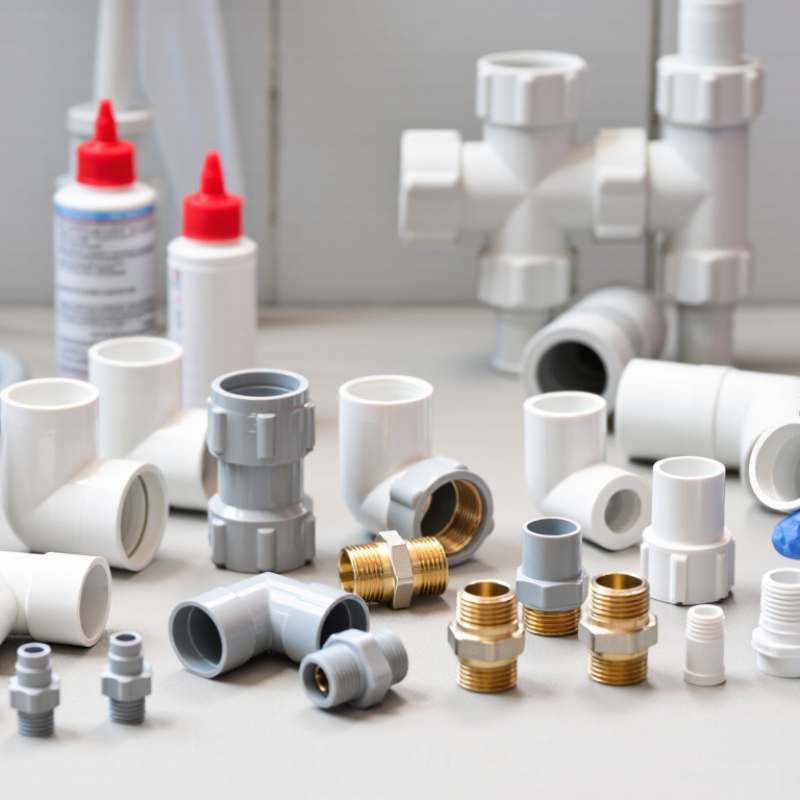
PVC pipe fittings are shaped components that connect, redirect, control, or terminate PVC pipes. Common examples include elbows, tees, couplings, reducers, unions, and end caps. Each fitting changes the path or function of a piping system. A 90-degree elbow turns water around a corner. A tee divides one line into two. A reducer joins pipes with different diameters.
These fittings are used in residential drainage, irrigation, water distribution, industrial process lines, and ventilation systems. Their low weight makes handling easier on crowded job sites. PVC also resists corrosion from many common chemicals. However, resistance is not unlimited. Temperature, pressure, fluid composition, and sunlight can change performance. A 2024 global market assessment estimated the PVC pipes market at roughly 23 billion US dollars in 2023, with continued growth expected through the decade. That figure includes pipe systems, while fittings remain essential for practical installation.
A reliable fitting must match the pipe size, pressure class, connection method, and applicable standard. Solvent-welded joints need clean, dry surfaces and correct curing time. Threaded connections require careful alignment. Too much force may damage the fitting. Field inspection should check for stress, poor support, and visible deformation. The label alone is not enough. I have found that simple measurements prevent expensive rework. Still, even experienced installers can overlook thermal movement or future access. ISO 1452 and relevant local plumbing standards provide useful reference points, but project conditions deserve separate review.
What Is PVC Pipe Fittings Used For? What Are PVC Pipe Fittings?
| Fitting Type | What It Is | Primary Function | Typical Applications | Connection Configuration | Important Considerations |
|---|---|---|---|---|---|
| Elbow | A curved fitting that changes the direction of a pipe. | Redirects fluid flow, commonly by 45 or 90 degrees. | Water supply lines, irrigation systems, drainage piping, and process-fluid installations. | Socket ends, threaded ends, or a combination of both. | Use the correct bend angle and allow adequate space for solvent cementing or threaded connections. |
| Tee | A fitting with three openings arranged in a T shape. | Creates a branch from a main pipeline or combines two flow paths. | Branch water lines, irrigation zones, filtration systems, and low-pressure process piping. | Equal-size outlets or a reduced branch outlet. | The branch size and flow direction should match the system design to avoid unnecessary pressure loss. |
| Coupling | A short fitting used to join two pipe sections in a straight line. | Extends or repairs a pipeline. | Residential plumbing, irrigation repairs, drainage systems, and general pipe assembly. | Socket-to-socket, threaded, or transition designs. | Pipe ends should be clean, square, and fully inserted to create a reliable solvent-cement joint. |
| Reducer | A fitting that connects pipes with different nominal diameters. | Transitions the system from a larger pipe size to a smaller size, or vice versa. | Water distribution, pump connections, filtration equipment, and changes in branch-pipe size. | Concentric or eccentric designs, depending on the installation. | Select the reducer according to the required flow rate, pipe standard, and connection method. |
| Adapter | A fitting that connects PVC pipe to another pipe material, component, or connection style. | Provides a transition between solvent-welded, threaded, flanged, or equipment connections. | Connections to valves, pumps, tanks, filters, metal pipe, and removable plumbing components. | Socket-to-thread, thread-to-socket, or socket-to-flange configurations. | Threaded plastic connections should not be overtightened because excessive force can damage the fitting. |
| Union | A detachable fitting that joins two pipe sections and can be disconnected without cutting the pipe. | Allows equipment or pipe sections to be removed for maintenance. | Pumps, filters, valves, water-treatment equipment, and accessible service points. | Usually includes two connection ends and a central threaded union nut. | Install unions where future maintenance is expected; they are generally not intended to compensate for pipe misalignment. |
| Cap | A fitting that closes the end of a pipe. | Terminates a pipeline or provides a temporary closure. | Unused branches, test sections, irrigation endpoints, and maintenance closures. | Socket, threaded, or mechanical connection. | Verify whether the closure is intended to be permanent or removable before selecting the connection type. |
| Plug | A component inserted into a fitting or threaded opening to block flow. | Closes a tee, valve port, drain point, or other opening. | Pressure testing, temporary line isolation, drainage points, and equipment connections. | Commonly socket or male-threaded. | Choose compatible thread dimensions and sealing materials for threaded applications. |
| Cross | A four-way fitting with one inlet and three branch outlets, or the reverse arrangement. | Connects four pipe runs at a single intersection. | Specialized distribution layouts, manifold arrangements, and some irrigation systems. | Socket, threaded, or mixed connections. | Use only where the flow pattern and maintenance access are suitable because multiple branches can increase hydraulic complexity. |
| Wye | A branching fitting with an angled outlet rather than a 90-degree branch. | Divides or combines flow with a smoother directional transition than a standard tee. | Drainage, waste piping, sewer lines, and gravity-flow systems. | Usually socketed or gasketed connections, depending on the piping system. | Commonly selected for drainage layouts where reduced turbulence and improved flow direction are useful. |
| Flange | A flat fitting with bolt holes used to create a detachable joint. | Connects PVC piping to pumps, tanks, valves, and other flanged equipment. | Water treatment, industrial piping, large plumbing systems, and equipment connections. | Socket, threaded, or integral flange designs with a gasket and bolts. | Bolts should be tightened evenly in a suitable sequence to avoid uneven gasket compression or flange stress. |
| Valve Fitting | A PVC component that controls, stops, or redirects fluid flow. | Provides isolation, regulation, or one-way flow control. | Water distribution, irrigation, pools, filtration systems, and chemical-service piping where compatible. | Socket, threaded, or flanged connections. | Confirm pressure rating, temperature limits, chemical compatibility, and valve orientation before installation. |
Related Posts
-
What is a Ball Valve and How Does it Work?
-
What is Stainless Steel Pipe Fittings and Their Uses?
-
Top 10 Stainless Steel Pipe Fittings at China Import Export Fair?
-

How to Choose Quick And Easy Fittings for Your DIY Projects?
-
Top 5 OEM Precision Parts for Enhanced Manufacturing Efficiency and Quality
-
Why Choose a Ball Valve for Your Next Project?